
Imagine it’s the middle of the Cold War. Guns, spies, nuclear missiles…all part of the usual espionage drama.
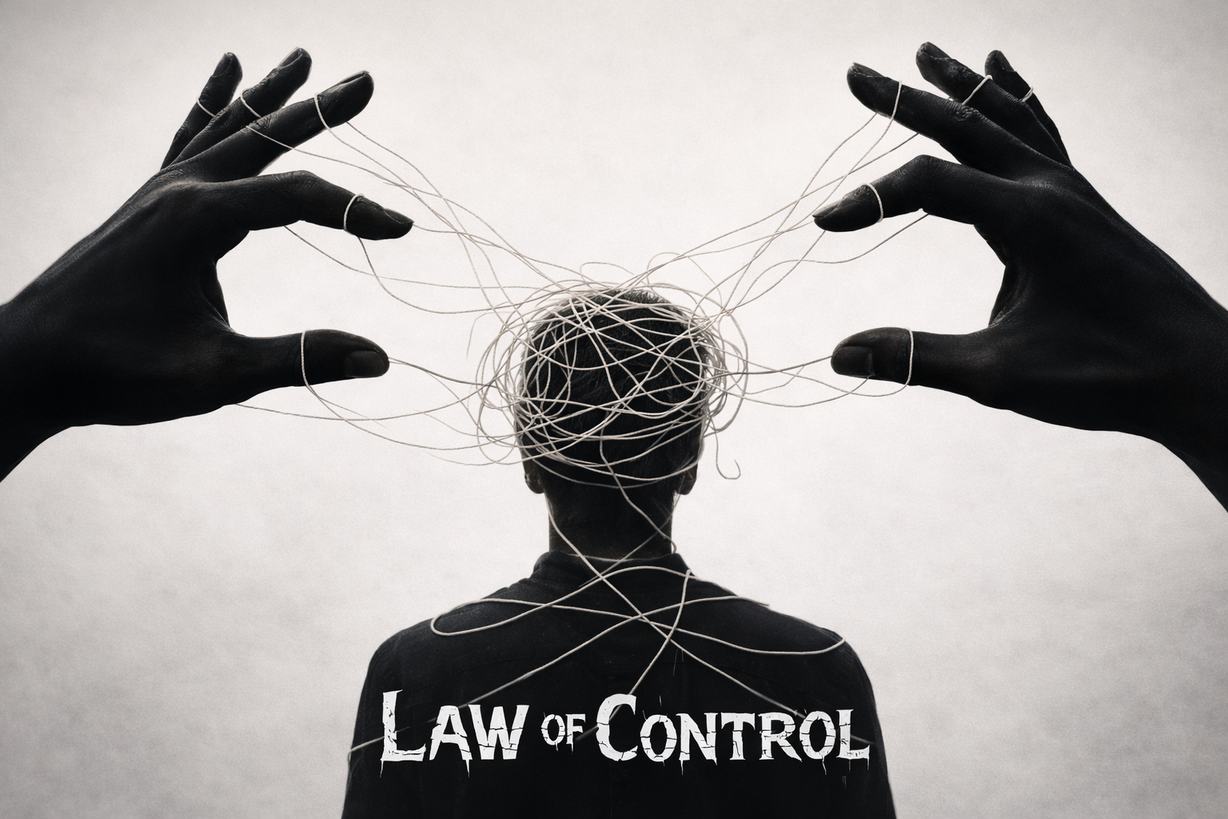
But what if I told you that deep inside Soviet corridors, behind locked doors, a different kind of weapon was being forged: not a gun, not a bomb, but the human mind itself.
Welcome to the shadowy saga of Russia’s secret psychic programs.
In the 1960s, the Soviet Union, ever paranoid about Western technological advantage, reportedly began a clandestine exploration of extrasensory perception (ESP), telepathy and psychokinesis.
According to declassified documents, Soviet scientists and military intelligence hoped to weaponise human consciousness.
They were not alone. Across the globe, similar whispers emerged. The CIA, for instance, launched its own psychic-espionage initiative, Project Stargate, around the same time, reportedly in response to Soviet interest in psychic spying.
Who Were the Psychic Spies?
One of the most famous alleged “psychic agents” to emerge from this murky world was Nina Kulagina. She claimed to move match-sticks, pens, even compass needles, with her mind alone. She allegedly could affect living hearts: some stories say she stopped a frog’s heart just by focusing on it.
Her feats caught the eye of Soviet researchers. For nearly two decades, during the last years of her life, she was reportedly monitored under “scientific” observation by the state.
But Kulagina was only one face among many. Veteran accounts suggest that by the late 1980s, the Soviet military had set up units. These included the so-called Military Unit №10003, devoted entirely to exploring “energy-information impact,” psychic reconnaissance, and “nontraditional” warfare.
The idea was bold (or bizarre, depending on where you sit): imagine soldiers trained not just in guns or radios, but in mind-reading, hypnosis and other paranormal skills.
Paranormal Warfare – Telepathy, Dolphins, and Government Memoirs
One of the wilder claims comes from a recent article in a Russian Defense-Ministry-sanctioned magazine. According to the piece, Soviet and Russian armed forces allegedly used parapsychology in real military operations. P
Psychic soldiers supposedly read locked safe documents, gathered secret intelligence, and even intercepted enemy communications.
And yes…that’s where the dolphins come in. The article claims that in early experiments, scientists trained dolphins telepathically and then tried to transfer those skills to human soldiers.
The result? According to the article, human “telepaths” emerged.
But the saga gets weirder still. The same memoirs claim that these “psychic powers” allowed soldiers not only to gather intel, but to cause chaos. The methods allegedly included “jamming” enemy computer systems and communications…just by the power of thought.
Whether you call this science, sci-fi or plain fiction, it reads like a Cold War spy thriller crossed with a paranormal horror novel.
Why Did the USSR and Russia Even Bother?
The logic, if you can call it that, was simple: if you can’t beat your enemy with bombs and tracking devices, maybe you can get inside their head.
In the nuclear-age arms race, some in the Soviet leadership believed that psychic powers might offer a strategic edge against Western powers.
They tried to dress the occult in the garb of “scientific research.” Telepathy became “long-distance biological system transmissions,” and psychokinesis was rebranded as “non-ionizing electromagnetic emissions from humans.”
Thus, the Kremlin wiped out the mystical undertones and repackaged paranormal fantasies as cold, technical dossier entries.
And for a time, it seemed serious. Agencies funded labs and psychologists. People were hypnotised. Experiments were carried out, some involving biological experiments, others involving shared brain waves and strange claims of remote influence.
The Collapse…Or Did It?
By the 1970s, serious scientists began to baulk. Several labs, such as the controversial ones in Novosibirsk, reportedly failed to reproduce any paranormal phenomena under controlled conditions. This resulted in the Ministry of Defence disbanding many of these early programs.
Still, that wasn’t the end of the story.
As the Soviet Union dissolved, interest in the unknown resurged, now under the Russian Federation. Former officers and parapsychologists quietly resurfaced, claiming the work never fully stopped.
Even recently, as public distrust of the West and NATO deepened, Russian military-supported publications have openly revived some of the old folklore: psychic soldiers, paranormal warfare, telepathic dolphins…really everything but laser guns.
Scepticism, Secrets, and Maybe Some Showmanship
Let’s be honest: much of this sounds downright outrageous.
And many scientists say precisely that. Most of the experiments either failed reproducibility tests or showed no statistical significance. “Psychokinetic empathy”, which was the idea that humans can influence other living beings at a distance, was never convincingly proven.
Still, the allure of the unknown proved powerful. For decades, anecdotal claims, stories of paranormal ops, and even rumours of psychic interventions in espionage circulated. These were fed by whistleblowers, memoirs, and the occasional leak.
Maybe some of it was exaggerated. Maybe some of it…you can call it folklore. But as any Cold-War veteran or mystery-lover will tell you: where there’s smoke, sometimes there’s fire. Or at least a very elaborate stage-set for one.
Why This Story Still Fascinates Us
For many of us, the Cold War evokes images of missiles, spies, and nuclear standoffs.
But the idea that two superpowers might have tried to fight with minds instead of bombs? It’s almost too wild to believe, yet impossible to dismiss entirely.
If nothing else, the story offers a cautionary tale. When fear and rivalry trump reason, even the most outlandish ideas get a hearing. And when governments use secrecy and propaganda, myths can become weapons.
For those of us now years past the age of late-night spy novels and early sci-fi thrillers, this tale of psychic arms has a potent mix of nostalgia, horror, and the shiver of “what-if.”
So, dear reader: next time you hear about secret government programs, mind control, or remote-viewing claims…take a moment, sip your coffee, raise an eyebrow, and recall that somewhere deep inside Russian archives, there might be a dusty file titled “Project Dolphin-Telepathy — Phase II.”
And even if the details are murky, the idea still lingers: war wasn’t always about bombs. Sometimes, it was about brains.