
At some point after forty, you notice something unsettling. The harder you try to control life, the messier it becomes. The more you chase happiness, the faster it runs. And the moment you stop trying so desperately, something clicks.
Welcome to the Law of Paradox, one of the most intriguing spiritual and metaphysical laws, and possibly the only law that laughs gently while rearranging your worldview.
This law doesn’t shout. It smirks. It waits until you’ve exhausted logic, ambition, effort, and self-help books. Then it taps you on the shoulder and says, “Try the opposite.”
What Is the Law of Paradox?
The Law of Paradox states that life often unfolds in ways that contradict our expectations, and that true outcomes emerge when we release force, control, or attachment to a specific result.
In simpler terms:
What you resist persists.
What you chase escapes.
What you surrender often arrives quietly.
It is the spiritual equivalent of quicksand. Struggle, and you sink. Relax, and you float.
This law appears across spiritual traditions, philosophy, psychology, and even modern science. Taoism phrases it beautifully: “The soft overcomes the hard.” Christianity echoes it with “The last shall be first.” Buddhism builds its entire teachings around non-attachment. And modern psychology confirms it through concepts like ironic process theory, trying not to think about something makes you think about it more.
Different language. Same paradox.
Why the Law of Paradox Shows Up More After 40
If you’re over forty, you’ve likely already met this law, repeatedly, though you may not have known its name.
You’ve seen it in relationships. The moment you stopped chasing approval, people leaned in. You’ve seen it in career paths. The job you never planned for became the most meaningful. You’ve seen it in happiness itself. Joy appeared when you weren’t looking for it.
This is not a coincidence. It’s timing.
Before forty, we’re taught to push, prove, build, achieve, and accumulate. Effort is rewarded. Hustle is praised. Control feels necessary.
After forty, something shifts. Life becomes less impressed by force. The Law of Paradox steps forward and says, “You’ve pushed enough. Now let’s see what happens when you stop.”
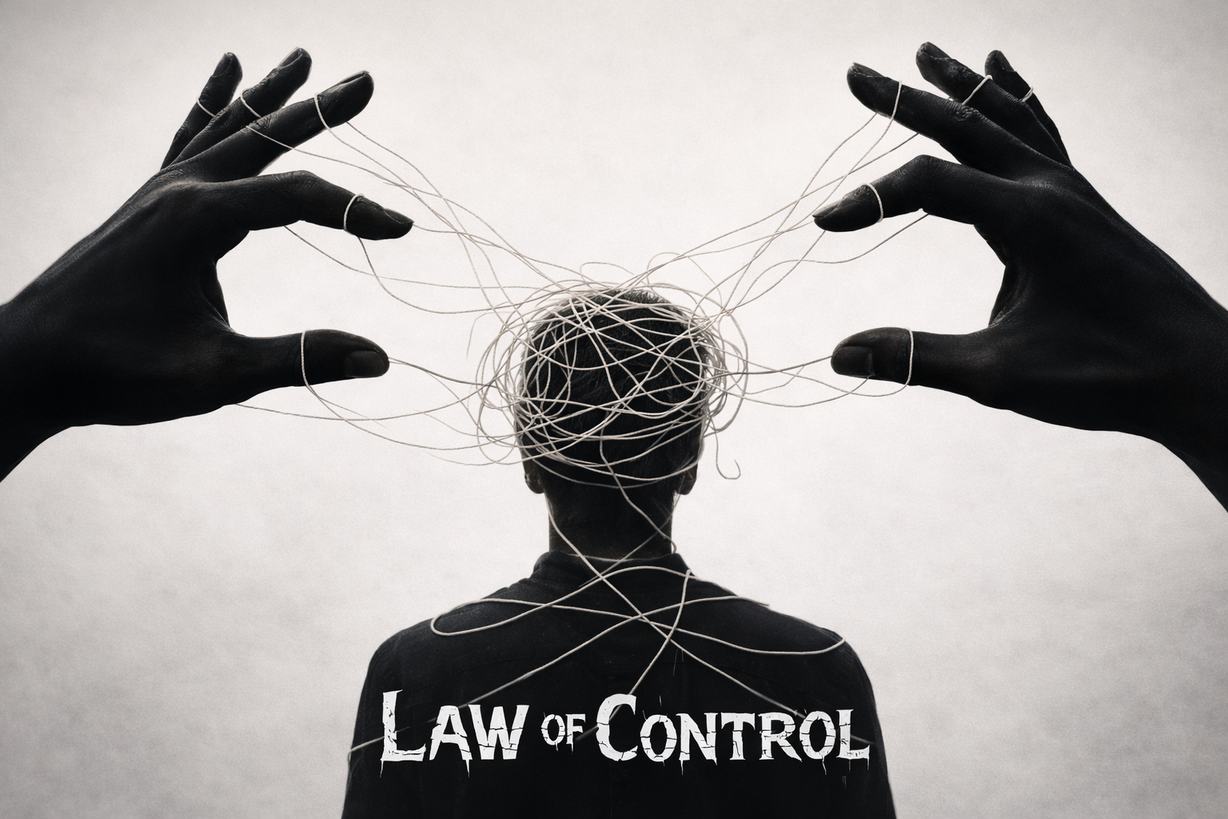
The Paradox of Control – Letting Go to Gain Power
One of the clearest expressions of this law is the paradox of control.
The more tightly you grip outcomes…people, plans, timelines…the more anxious, frustrated, and powerless you feel. Let go slightly, and suddenly you’re thinking clearly. Let go fully, and unexpected solutions appear.
This does not mean passivity. The Law of Paradox is not about doing nothing. It’s about doing without desperation.
Think of it like driving. White-knuckling the steering wheel doesn’t make you safer. It makes you tense, rigid, and reactive. Relaxing your grip doesn’t remove responsibility. It improves responsiveness.
Spiritually, this law teaches that clarity arises from calm, not force.
The Paradox of Self-Worth – Stop Trying to Be Enough
Here’s where the Law of Paradox becomes quietly ruthless.
The more you try to prove your worth through achievement, people-pleasing, and over-functioning, the more insecure you feel. The moment you stop trying to be “enough,” you finally are.
This is why confidence grows when you stop performing it. It’s why authenticity attracts more than perfection. And it’s why people who have stopped seeking validation tend to receive it effortlessly.
The Law of Paradox exposes a deep truth: self-worth is not earned. It’s revealed when you stop negotiating for it.
The Paradox of Desire – Wanting Less, Receiving More
This law has an almost mischievous sense of humor when it comes to desire.
When you need something such as love, recognition, money, or answers, it becomes heavy. Need carries fear. Fear constricts energy. And paradoxically, that constriction blocks what you want.
When you want something without attachment, the energy changes. There’s openness instead of tension. Curiosity instead of anxiety. Trust instead of urgency.
This is why people often meet the right partner after they’ve stopped actively searching. Why solutions appear after you’ve stopped obsessing. Why sleep comes when you stop trying to fall asleep.
The Law of Paradox whispers, “Relax. I work better when you’re not hovering.”
The Paradox of Strength – Vulnerability as Power
Another uncomfortable truth the Law of Paradox insists upon: real strength often looks like softness.
Admitting uncertainty. Saying “I don’t know.” Allowing emotion. Asking for help. These actions feel like weakness. That is, until they transform relationships, deepen trust, and create genuine connection.
In midlife, especially, this paradox becomes unavoidable. Pretending to have it all figured out becomes exhausting. Vulnerability, once feared, becomes freeing.
The law reveals that resilience is not built through armor, but through flexibility.
Why This Law Is Spiritually Significant
Metaphysically, the Law of Paradox reminds us that life is not linear. Consciousness does not operate on straight lines. Growth moves in spirals. Truth often arrives sideways.
This law teaches humility. It dissolves the ego. It loosens the illusion that we are solely in charge. Not powerless but partnered with something larger.
Spiritually mature individuals don’t abandon effort; they abandon force. They act, but they also allow. They plan, but they trust. They participate without micromanaging reality.
And that balance, between intention and surrender, is where paradox becomes wisdom.
Living the Law of Paradox (Without Trying Too Hard)
Ironically, you cannot force yourself to live this law. That would defeat the point.
But you can notice it.
Notice when effort turns into strain.
Notice when control turns into anxiety.
Notice when letting go brings relief rather than loss.
The Law of Paradox doesn’t demand belief. It only asks for observation. The moment you see it operating in your life, it becomes impossible to unsee.
And once you stop fighting it, something curious happens.
Life doesn’t become perfect.
It becomes lighter.
More spacious.
More cooperative.
Which, paradoxically, is when it starts working better.