
When you think of military operations, your mind probably conjures images of tanks, fighter jets, or top-secret cyber warfare.
But what if I told you that, for decades, the military has explored an altogether stranger battlefield…one where bullets and bombs are replaced by minds, visions, and… psychic phenomena?
No, you’re not in a sci-fi movie. This is real, weird, and, frankly, fascinating.
The Mind as a Weapon – A History of Military Psychics
The notion that the military might explore psychic powers might sound like something out of The X-Files or a late-night infomercial promising “mind-reading secrets.”
Yet, during the Cold War, the U.S. and other nations were deeply invested in the idea that psychic abilities could serve as a strategic advantage. The idea was simple: if you could see the unseen, predict the unpredictable, or influence others’ thoughts from afar, you could outmanoeuvre your enemies without firing a single shot.
The most famous example comes from a program with the decidedly unassuming name Project Stargate, run by the CIA and the U.S. Army from the 1970s to the 1990s. Stargate was dedicated to researching “remote viewing”, the ability to psychically see locations, objects, or people from a distance.
Think of it as Google Maps, but instead of satellite images, your psychic mind is doing the recon.
Remote Viewing – The Military’s Crystal Ball
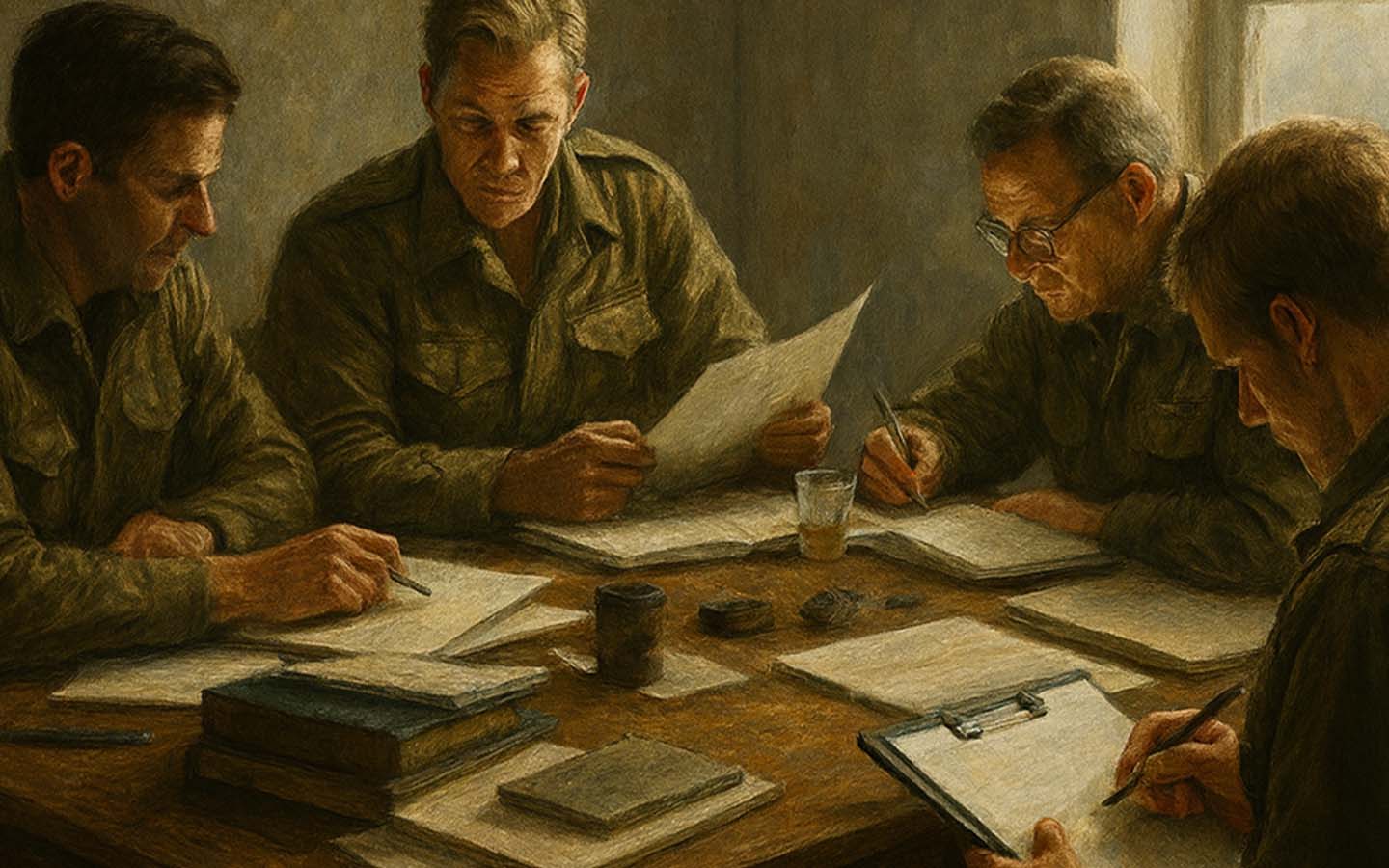
Remote viewing sounds ridiculous. And on paper, it kind of is. Volunteers would sit in a quiet room, often blindfolded, and attempt to “see” hidden military installations, secret documents, or enemy positions thousands of miles away.
The results?
Well, some were surprisingly accurate, others hilariously off. One report claimed a remote viewer correctly described a secret Russian military base. Another famously mistook a Soviet research facility for a “giant ketchup factory.”
Clearly, psychic espionage isn’t an exact science.
Yet, the military continued funding these experiments for decades. Why? Because in intelligence work, even a small chance of success can justify the cost. If a psychic tip could prevent a missile strike or locate hostages, it was worth exploring, no matter how bizarre it seemed.
Psychics in Combat – Beyond the Boardroom
Remote viewing wasn’t the only psychic trick in the military’s playbook. During the 1980s, the U.S. explored psychokinesis, the supposed ability to move objects with the mind. Volunteers attempted everything from bending metal to influencing electronic devices.
While results were controversial and often debunked, the military’s willingness to test these boundaries shows just how creative and desperate they could get in the search for an edge.
There were also stories of soldiers trained in intuition-based targeting, where “gut feelings” about enemy movements were treated as valuable intelligence.
Some commanders swore by these abilities, insisting that a psychic hunch had saved countless lives. Others rolled their eyes so hard it practically became a national sport.
The Human Side of Military Psychics
One of the most fascinating aspects of these programs isn’t the supposed psychic feats, but the people behind them. Remote viewers were often ordinary Americans with extraordinary patience, persistence, and sometimes a very quirky sense of humor.
Some described it as meditation meets detective work, while others likened it to trying to interpret static on an old TV.
Humor was a survival tool. One report described a session where a remote viewer, trying to describe a Soviet military installation, kept sketching what looked like a “giant cosmic chicken” instead. His handlers, who were themselves serious military professionals, couldn’t help but chuckle.
Yet, somewhere in those abstract sketches might have been a kernel of intelligence.
From Cold War Curiosity to Modern Speculation
After the Cold War ended, most of these programs were officially shut down or declassified. Project Stargate ended in 1995, with the CIA concluding that while there were some “interesting” results, psychic espionage wasn’t reliable enough for practical use.
But whispers and conspiracy theories persist.
Some claim that psychic programs never really ended; they’ve simply gone underground, merged with experimental tech programs, or evolved into “intuitive intelligence units.” Others speculate about military interest in telepathy, dream infiltration, or even predicting geopolitical events. Whether these claims are true or just tantalizing urban legends remains…well, classified.
Why We’re Still Fascinated
So why does psychic warfare capture the imagination decades later? Maybe it’s because it combines our oldest fantasies with our newest fears.
It’s James Bond-level secret ops meeting your high school science fiction club. It’s thrilling, unnerving, and deeply human: we’ve always wanted to see the future, read minds, and find shortcuts in life, and the military just put a very serious label on it.
The Cold War era was full of spy thrillers, secret programs, and paranoid fantasies. Some are based on reality, some are pure fiction. The idea that ordinary people with “ordinary” brains could make an extraordinary difference feels exciting and almost comforting.
Final Thoughts – Fact, Fiction, or Fun?
Whether you believe in psychic phenomena or not, there’s no denying the military’s experiments read like a mash-up of history, science fiction, and comedy. Soldiers, scientists, and psychics came together to explore the frontiers of the mind, often with unpredictable results.
Sometimes they succeeded, sometimes they failed spectacularly, and sometimes…they just made us laugh.
At the end of the day, the military’s psychic experiments are a reminder that even the most serious institutions are capable of curiosity, creativity, and a little bit of whimsy.
And who knows? Maybe next time you have a “gut feeling” about something, you’re channeling the same forces that once captivated the CIA.
After all, history shows that truth can be stranger than fiction. Sometimes, even a “giant cosmic chicken” might save the day.